Understanding Yellow Leaves on Bleeding Hearts: Key Points
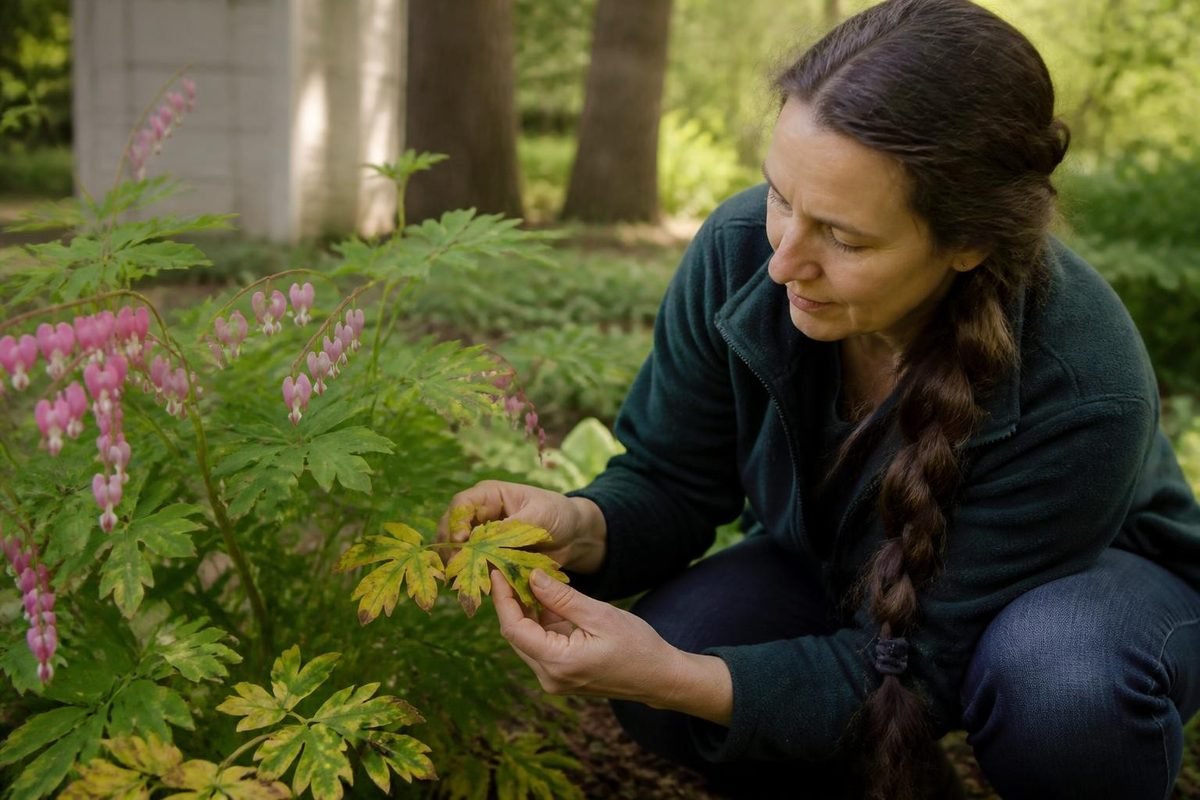
Bleeding heart leaves commonly yellow after flowering because the plant is beginning its normal summer rest. Heat can bring on this change sooner, but overly wet or dry soil and disease are other possible causes.
Foliage fading as part of the plant’s cycle
The common bleeding heart, Lamprocapnos spectabilis, grows and blooms in spring. As the weather warms, it often dies back above ground and rests underground, with its roots still alive. The leaves yellow and wither during this process. In places where spring quickly becomes warm, the change may start soon after the plant blooms in April.
Consider both the season and the pattern of change. If flowering has ended and the leaves are fading gradually, with no clear spots or signs of rot, normal dormancy is a reasonable explanation. The plant may be out of sight for the remainder of the growing season, then appear again the next spring.
Bleeding hearts do not all behave alike. Some fringed types may hold their leaves later into summer, and they can flower again when conditions are suitable. A plant that stays green through summer is not necessarily doing anything wrong.
Other causes to check
Investigate further if yellowing begins before or while the plant is flowering, happens quickly, or appears alongside damaged stems. Before changing your care routine, feel the soil and inspect both the upper and lower surfaces of the leaves.
- Too much moisture: Soil that remains waterlogged can leave roots short of oxygen and increase the risk of rot. Soft, dark stems where they meet the soil are a sign to take seriously.
- Not enough moisture: A long dry spell may leave leaves wilted or yellow, sometimes with crispy edges. Check below the soil surface, since the top can look dry even when lower soil is moist.
- Excess sun or heat: Hot afternoon sunlight may scorch the leaves, especially if the soil is dry. Bleeding hearts generally grow best with some shade.
- Disease: Leaf spots, stems with unusual discoloration, or wilting that continues after watering may indicate a problem other than dormancy. Remove badly affected plant material, and do not leave it lying on the soil.
More than one cause can produce similar signs. Yellow leaves by themselves do not prove that roots are rotting or that disease is present, so do not choose a treatment based on leaf color alone.
What to do once flowering ends
Keep healthy leaves in place until they turn yellow and collapse. While they are green, they help the plant make food, so fading flowers alone are not a reason to cut the foliage. After the leaves have died back, trim them away. Mark the plant’s location so you can avoid its roots when digging or planting nearby.
While the plant is actively growing, water as needed to keep its soil evenly moist, not soaked. Make sure excess water can drain away, particularly if the ground is heavy. Once the plant is dormant and the leaves have disappeared, there is no need to keep the bare soil constantly wet.
Other perennials nearby can occupy the space while the bleeding heart is dormant. Leave room for it to emerge again, and if its growth seems weak next spring, review the soil moisture and the conditions around the plant.
More background: causes of wilting flowers
Ends · GARDENGUIDE64